Shoto Niju Kun: The Twenty Guiding Principles of Karate-do
The official English translation of Shoto Niju Kun (The 20 Guiding Principles of Karate-do) by Master Gichin Funakoshi, published by Nihon Karate-do Shotokai Tokyo Hombu
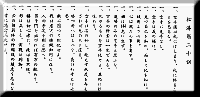
Archival Document • The Shotokai Encyclopedia Archive
Shōtō Nijū Kun (松濤二十訓)
The Twenty Guiding Principles of Karate-do by Supreme Master Gichin Funakoshi
Primary Source Reference:
This official translation is drawn from the booklet “There Is No First Strike in Karate-do: English Translation of the Nihon Karate-do Shotokai Booklet” (Page 4, published May 16, 2023 by Nihon Karate-do Shotokai Central Headquarters Dojo Shotokan, 2-1-7 Kikukawa, Sumida-ku, Tokyo, Japan).
• Download Official English PDF Document
• View Official Announcement on Shotokai.jp (News #5329)
Throughout his life, Master Gichin Funakoshi (pen name Shōtō, “Pine Waves”) emphasized that technical dexterity is worthless without moral discipline and ethical maturity. To guide disciples on and off the tatami, Master Funakoshi formulated the Shōtō Nijū Kun (Twenty Precepts of Shoto).
Below is the official authorized translation preserved and published by the Central Headquarters Dojo Shotokan in Tokyo:
The 20 Principles
-
空手道は礼に始まり礼に終ることを忘るな
Karate-do wa rei ni hajimari rei ni owaru koto o wasuruna
Do not forget that Karate-do begins and ends with Rei (respect, courtesy). -
空手に先手なし
Karate ni sente nashi
There is no first strike in Karate. -
空手は義の補け
Karate wa gi no tasuke
Karate stands on the side of justice. -
先づ自己を知れ而して他を知れ
Mazu jiko o shire shikashite ta o shire
First know yourself, then know others. -
技術より心術
Gijutsu yori shinjutsu
Mentality over technique. -
心は放たん事を要す
Kokoro wa hanatan koto o yōsu
The mind must be set free. -
禍は懈怠に生ず
Wazawai wa ketai ni shōzu
Calamity springs from carelessness. -
道場のみの空手と思うな
Dōjō nomi no karate to omouna
Karate goes beyond the dojo. -
空手の修業は一生である
Karate no shūgyō wa isshō de aru
The study of Karate is a lifelong pursuit. -
凡ゆるものを空手化せよ其処に妙味あり
Arayuru mono o karate-ka seyo soko ni myōmi ari
Apply the way of Karate to all things. Therein lies its beauty. -
空手は湯の如し絶えず熱度を与えざれば元の水に還る
Karate wa yu no gotoshi taezu netsudo o ataezareba moto no mizu ni kaeru
Karate is like boiling water; without heat, it returns to its tepid state. -
勝つ考は持つな負けぬ考は必要
Katsu kangae wa motsuna makenu kangae wa hitsuyō
Do not think of winning. Think, rather, of not losing. -
敵に因りて轉化せよ
Teki ni yorite tenka seyo
Make adjustments according to your opponent. -
戦は虚実の操縦如何に在り
Tatakai wa kyojitsu no sōjū ika ni ari
The outcome of a battle resides in how one handles emptiness and fullness (weakness and strength). -
人の手足を剣と思へ
Hito no teashi o ken to omoe
Think of hands and feet as swords. -
男子門を出づれば百萬の敵あり
Danshi mon o izureba hyakuman no teki ari
When you step beyond your own gate, you face a million enemies. -
構は初心者にあとは自然体
Kamae wa shoshinsha ni ato wa shizentai
Kamae (posture) is for beginners; later one stands in Shizentai (natural stance). -
型は正しく実戦は別物
Kata wa tadashiku jissen wa betsumono
Perform kata correctly; real combat is another matter. -
力の強弱体の伸縮技の緩急を忘るな
Chikara no kyōjaku karada no shinshuku waza no kankyū o wasuruna
Do not forget: light and heavy application of force, expansion and contraction of the body, slowness and speed of techniques. -
常に思念工夫せよ
Tsune ni shinen kufū seyo
Always be mindful, diligent, and resourceful in your pursuit of the Way.
Historical Commentary: Karate ni Sente Nashi
The second precept—Karate ni Sente Nashi (“There is no first strike in karate”)—is the fundamental motto inscribed on Master Funakoshi’s memorial monument at Engaku-ji Temple in Kamakura.
As explained by Master Jotaro Takagi and the senior masters of Nihon Karate-do Shotokai, this precept is not merely physical non-aggression; it is a spiritual demand to maintain an empty, tranquil mind free of hostile intent. When one has no impulse to strike or conquer, conflict dissolves before it can materialize.