Takeshi Shimoda: Central Pillar of Early Shotokan
Takeshi Shimoda (1901–1934), master of Maniwa Nen-ryū swordsmanship and Gichin Funakoshi's brilliant first chief assistant, whose untimely passing led to Yoshitaka Funakoshi taking charge
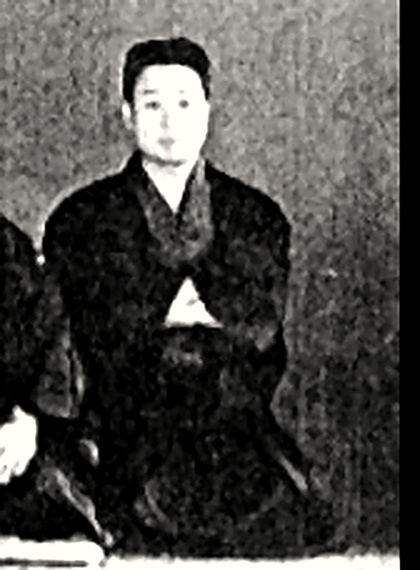
Archival Document • The Shotokai Encyclopedia Archive
Master Takeshi Shimoda (1901 – 1934)
First Chief Assistant to Gichin Funakoshi • Master of Maniwa Nen-ryū Swordsmanship
Primary Source & Archival Corroboration:
• Documented in the official publication "There Is No First Strike in Karate-do: English Translation of the Nihon Karate-do Shotokai Booklet" (Pages 8, 13, published May 16, 2023 by Nihon Karate-do Shotokai Central Headquarters Dojo Shotokan, 2-1-7 Kikukawa, Sumida-ku, Tokyo, Japan).
• The historical photograph below of Master Gichin Funakoshi with Takeshi Shimoda was preserved and published by Master Shigeru Egami in his seminal work "The Way of Karate: Beyond Technique" (Kodansha International, 1976).
• Download Official English PDF Document
• View Official Announcement on Shotokai.jp (News #5329)
Master Takeshi Shimoda (1901–1934) — Restored Solo Portrait
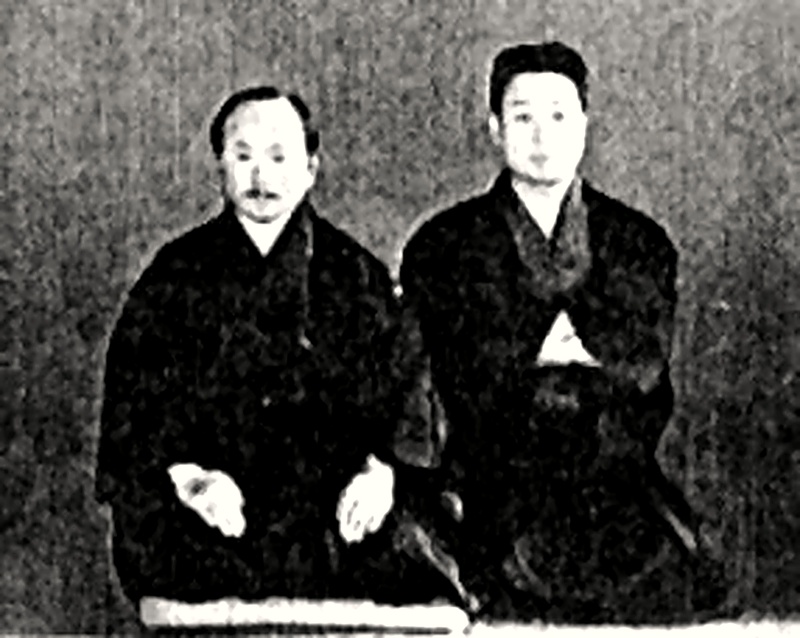 Historic photo: Master Gichin Funakoshi (left) with assistant Takeshi Shimoda (right), Tokyo c. 1930–1933 (from *Beyond Technique*)
Funakoshi’s Most Brilliant Early Mainland Disciple
In the pioneering decade of the 1920s and early 1930s, when Master Gichin Funakoshi was establishing karate clubs across Tokyo’s premier universities (Keio, Waseda, Takushoku, Chuo), his principal teaching assistant and demonstrator was Takeshi Shimoda (下田 武, 1901 – October 1934).
Shimoda was an extraordinary budoka. Prior to dedicating his life to karate under Funakoshi, he had attained deep mastery in classical Japanese swordsmanship as an expert practitioner of Maniwa Nen-ryū (馬庭念流), one of Japan's oldest and most formidable schools of kenjutsu, founded in the 14th century, and also researched traditional ninjutsu.
Integrating Sword Dynamics with Karate
Shimoda brought the acute spatial awareness (ma-ai), lightning footwork (tai-sabaki), and decisive spirit (kime) of classical swordsmanship into his karate practice. Funakoshi recognized in Shimoda a rare genius—a mainland practitioner who instantly understood the lethal, sword-like nature of Okinawan striking:
"Treat your arms and legs as if they were drawn swords."
— Ankoh Azato & Gichin Funakoshi
As Funakoshi's Shihandai (Chief Assistant Instructor), Shimoda taught at Waseda University Karate Club, Keio University, and the early Meisei Juku dojo. He was revered as the "Single Cedar of Shotokan" (Shotokan no Ipponsugi), celebrated for his flawless execution of classical kata and uncompromising rigor in basic training (kihon).
In The Way of Karate: Beyond Technique, Master Shigeru Egami reminisced that Shimoda’s movements appeared remarkably light and effortless, yet his technique possessed tremendous penetrative accuracy that was almost impossible to deflect or block.
The Exhausting National Tour and Untimely Passing (1934)
In 1934, as interest in karate surged across the main Japanese islands, Master Funakoshi embarked on an extensive, demanding instructional tour of the Kansai and Osaka regions. Shimoda accompanied the master, performing numerous intense demonstrations daily, absorbing full-contact blows, and instructing hundreds of university students.
The grueling pace took a severe physical toll. Shimoda contracted a severe respiratory infection and pneumonia. Despite medical interventions, he passed away in October 1934 at the young age of 33.
The Succession of Yoshitaka Funakoshi
Shimoda’s premature death devastated Master Gichin Funakoshi. Not only had he lost his most loyal and capable assistant, but the burgeoning university clubs were left without an instructor capable of matching Shimoda's extraordinary technical standard.
Faced with this critical crisis, Master Funakoshi called upon his third son, Yoshitaka (Gigō) Funakoshi, who was then working as a radiologist technician at Tokyo Imperial University Hospital. Yoshitaka accepted his father's call, resigned his hospital position, and stepped in to fill Shimoda’s shoes as the chief instructor of the Shotokan school.
Thus, Takeshi Shimoda’s tragic passing became the historical turning point that brought Yoshitaka Funakoshi to the helm, sparking the technical revolution that forged modern Shotokan and Shotokai karate.
Key Historical Data
- Born: 1901 (Meiji 34), Japan
- Died: October 1934 (Showa 9, aged 33)
- Kanji: 下田 武
- Martial Background: Expert in Maniwa Nen-ryū Kenjutsu; researcher of classical ninjutsu
- Role: First Chief Assistant Instructor (Shihandai) to Gichin Funakoshi; Shihan at Waseda University Karate Club
- Historical Significance: Known as the "Single Cedar of Shotokan"; his passing in 1934 prompted Yoshitaka Funakoshi to assume technical leadership.
- Archival Reference: Preserved in Shigeru Egami's The Way of Karate: Beyond Technique (1976).