TSUKI
Tsuki (Fist techniques) From shizen-tai, stretch the arm and the fist comes out straight and with maximum speed. Start the movement with the back of the fist fa
Tsuki (Fist techniques)
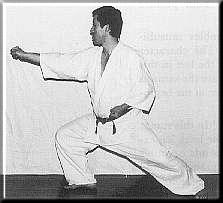
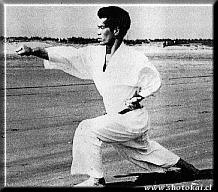
From shizen-tai, stretch the arm and the fist comes out straight and with maximum speed. Start the movement with the back of the fist facing the ground, start to turn it the moment the elbow separates from the side of the body, it ends the movement with the back of the fist facing up.
The opposite arm, called hiki-te, performs the movement in the exact opposite direction and simultaneously. The attack must be focused on the center. The initial speed and relaxation you start off with must be part of the movement from start to finish, just then the whole body should be included and especially the dorsal, abdominal and gluteus muscles.
The tsuki is the natural weapon par excellence in Karate-Do. It is one of the purest techniques of Karate: speed, precision and great technical perfection are necessary for it to be totally effective. If there is no effectivity in the tsuki, there is no need to defend yourself.
Initial interval: Relaxation and control of breathing are fundamental.
Intermediate: Both elbows rub the sides of the karateka.
The correct synchronization between the tsuki and hikite. Both techniques end with the forearms almost parallel to the ground.
Two simultaneous movements must be considered, a forward punch and a backward elbow blow.
Oi-Zuki:
A blow with the same hand as the leg that advances.
Gyaku Zuki:
A blow with the opposite fist of the leg that is placed forward.