Fundamental Positions — Basic Stances of Karate-do
The basic stances of Karate-do found in foundational kata such as Taikyoku and Heian. Understanding weight distribution, joint conditioning, and rooted stability across Zenkutsu Dachi, Kokutsu Dachi, Kiba Dachi, and Fudo Dachi
Fundamental Positions • Basic Stances of Karate-do
Shotokai Karate Budo • Technical Descriptions • Foundations
The basic stances are those foundational postures found throughout the introductory and classic kata (Taikyoku and Heian), forming the bedrock of all movement and technique in traditional Karate-do.
When practicing these stances, they must never be treated as rigid or static exercises. The true efficacy of every strike, block, and kick depends upon a stable, rooted foundation capable of fluid transition.
Mastering these stances and studying their interrelated dynamics is essential for sound technical progression and a genuine understanding of the essence of traditional Budo.
Physiological & Technical Value
Practicing these postures conditions and aligns the principal lower-body joints (ankles, knees, and hips). It develops muscular elasticity in the adductor muscle group while simultaneously strengthening the stabilizing muscles of the lower body: the peroneals, soleus, gastrocnemius (calves), hamstrings, quadriceps, and glutes.
Negligent or sloppy stance practice creates deeply ingrained technical defects that are exceedingly difficult to correct later, severely undermining the stability and power of all techniques.
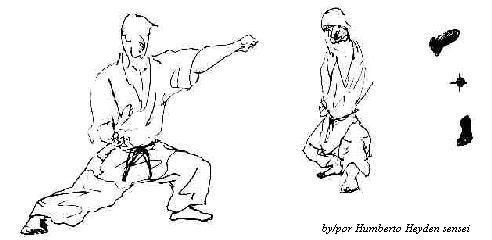
Zenkutsu Dachi • Forward Stance
A solid, forward-driving stance with approximately 70% of the body weight placed on the front leg and 30% on the rear leg. This posture ensures maximum forward penetration in attacks and unshakeable resistance when delivering blocks.
Kokutsu Dachi • Back Stance
A defensive posture with approximately 70% of the weight placed on the rear leg and 30% on the front leg. When bracing against a powerful incoming attack, Kokutsu Dachi establishes a firm, shock-absorbing base rooted through the rear heel.
Kiba Dachi • Straddle / Horse-Riding Stance
The horse-riding stance, with feet set wider than shoulder width, feet parallel with toes pointing slightly inward, and strong outward tension maintained through both knees. It provides immense stability, cultivating lower-body stamina and strength. When delivering lateral attacks, Kiba Dachi presents a solid base while aligning the practitioner in profile toward the opponent.
Fudo Dachi • Rooted / Immovable Stance
Also known as Sochin Dachi, this stance shares key characteristics with Kiba Dachi. Weight is distributed equally between both legs (50/50), with the center of gravity settled centrally and outward tension maintained through the knees, offering both forward stability and lateral adaptability.
Photographic Reference
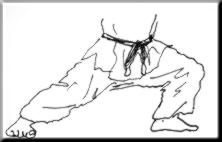 Zenkutsu Dachi • Profile
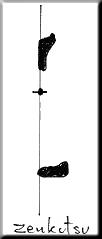 Zenkutsu Dachi • Alignment
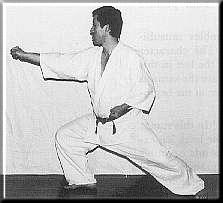 Oi Zuki in Forward Stance
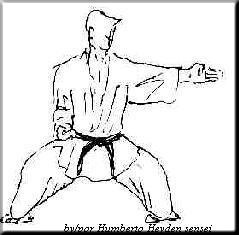 Kiba Dachi • Lateral View
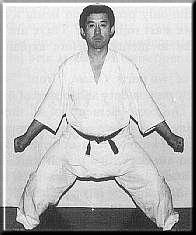 Kiba Dachi • Outward Tension
 Fudo Dachi • Rooted Stance