Mae Geri — Front Kick: Mechanics, Keage & Kekomi
Comprehensive technical guide to Mae Geri (Front Kick): chambering mechanics, hip projection, koshi (ball of the foot) impact, and the distinction between Keage (snap) and Kekomi (thrust)
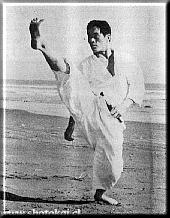
Archival Document • The Shotokai Encyclopedia Archive
Mae Geri • Front Kick
Shotokai Karate Budo • Technical Descriptions • Leg Techniques (Ashi Waza)
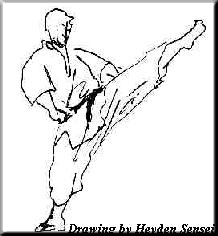
Mae Geri is the foundational direct leg technique of Karate-do, mobilizing the synchronized action of the ankle, knee, and hip joints.
1. Chambering & Trajectory
The first fundamental principle is folding the kicking heel tightly against the inner thigh of the kicking leg, ensuring the foot clears directly over the knee of the supporting leg as it drives forward.
By keeping the knee deeply bent as the hips shift forward, the travel arc of the foot upon extension is maximized, greatly increasing acceleration and penetration power.
The trajectory of Mae Geri must remain centered along the midline of the body: never flare the kicking knee outward; it must brush past the supporting knee as it rises.
2. Hip Drive & Impact
- Drive the hips forward within the foundation established by the supporting foot.
- Extend the knee and ankle fully into the target.
- Pull the toes sharply upward and backward to strike cleanly with the ball of the foot (koshi).
- Immediately snap the foot back (hikiashi) to prevent the leg from being seized.
3. Role of the Supporting Leg
The supporting foot must be planted firmly with the toes directed toward the target. The supporting knee and ankle remain slightly flexed in the direction of the kick to absorb recoil and govern penetration depth.
Percussion vs. Penetration: Keage and Kekomi
In traditional execution, we distinguish between two distinct delivery modes:
Mae Geri Keage • Front Snap Kick
- The hips remain relatively quiet and upright.
- The knee drives upward and snaps forward in an ascending, whipping arc.
- Retraction (hikiashi) occurs at maximum velocity to deliver percussive shock.
Mae Geri Kekomi • Front Thrust Kick
- The hips drive forward past the initial supporting base, thrusting the entire body mass behind the kick.
- The knee and ankle reach full straight extension at the exact instant of impact, driving deeply into the opponent's abdomen or solar plexus.
Step-by-Step Motion Study
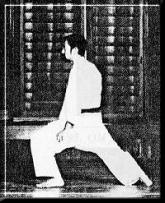 1. Chambering
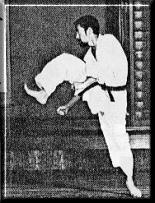 2. Knee Elevation
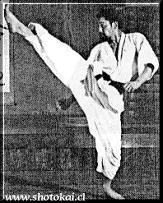 3. Extension
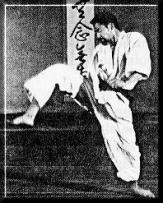 4. Impact (Koshi)
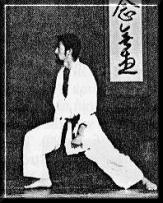 5. Retraction